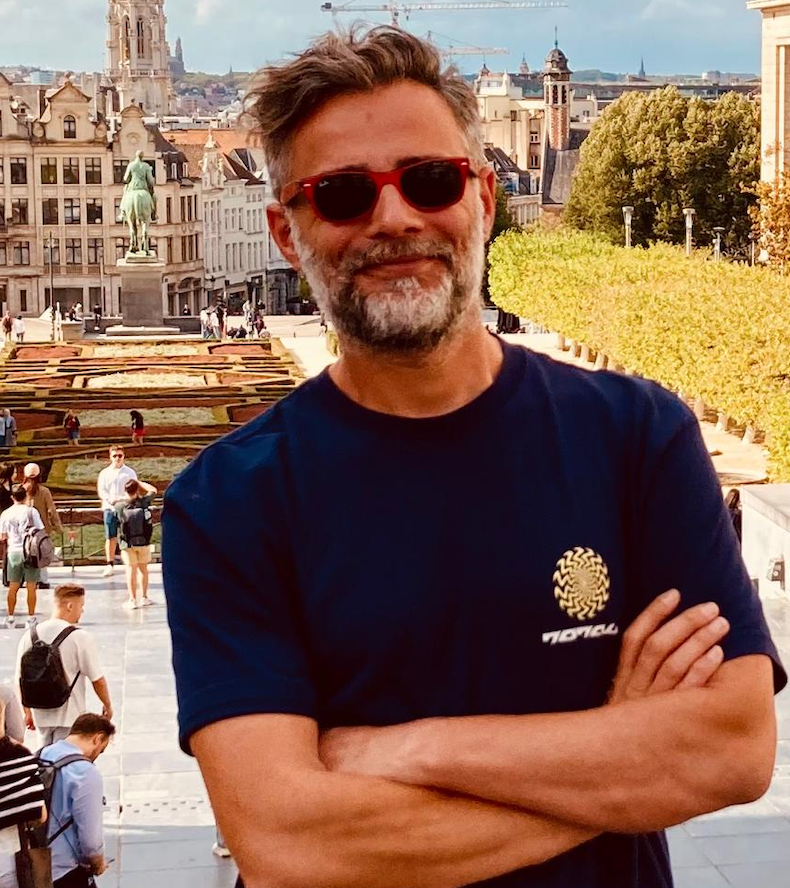
Evrim Erol
Kutahya Dumlupinar University
Member of: WG2
FEATURED NEOLOGISM:
My favourite neologism is doomscrolling (English). I find it striking because it captures a very contemporary habit in a short, readable form. Structurally, it is a transparent compound: doom (evoking threat, gloom, or bleak expectation) + scrolling (the repeated action of moving through an endless digital feed). The form almost explains itself—spending too much time scrolling through content that fuels negative emotions such as sadness, anxiety, or anger.
From a lexical-innovation perspective, what interests me most is how quickly the term became widely recognisable and how productive it is. It moves easily across word classes and supports new formations: I can say I “doomscroll,” call someone a “doomscroller,” or refer to “doomscrolling” as an established practice. That productivity helps the term travel across communities and genres, from everyday talk to media commentary.
The background of doomscrolling is closely tied to platform-based news consumption and algorithmically curated feeds that keep nudging attention forward—one more update, one more headline. The term gained particular momentum in the early COVID-19 period, when uncertainty and constant updates pushed many people into repeated checking and refresh loops. It was not just a convenient label; it gave a name to an experience many people recognised but struggled to describe.
I also like doomscrolling because it works as a small conceptual tool. Once the behaviour is named, it becomes easier to talk about, reflect on, and, if needed, regulate. In that sense, the word does more than tag a habit—it makes a digital experience shareable and comparable across contexts.
I am Assoc. Prof. Dr. Evrim Erol, based at Kütahya Dumlupınar University (Türkiye). I work in educational administration, and I am especially interested in how institutional language changes under policy shifts and digitalisation. In practice, I follow the “life cycle” of emerging terms: how concepts and labels that enter circulation through international agendas, reports, and platform-driven debates are taken up, translated, debated, and eventually normalised in national policy texts, university regulations, and everyday educational practice. This line of work aligns closely with ENEOLI’s focus on lexical innovation and the systematic study of neology across languages and contexts.
Methodologically, I use both qualitative and quantitative approaches. I carry out document- and discourse-informed analyses of policy and organisational texts, and when stronger measurement is needed, I complement this work with survey research, scale adaptation/validation, and psychometric reporting. I also care about making research usable beyond academic circles. For that reason, I often turn analytical insights into practical materials—short glossaries, concept maps, and example-based annotation guidelines—that help educators and students engage with new terminology in a clear and critical way.
Within ENEOLI, I would like to contribute primarily to WG2. In particular, I want to support transparent and reproducible workflows for identifying and describing new terms in education-related corpora, and to share Turkish-language examples where borrowings and neologisms are highly visible. WG2’s aim to build an online repository of digital resources, methods, and tools fits well with my interest in making outputs accessible and reusable across contexts. I am also willing to support ENEOLI’s outreach-oriented activities that communicate neologisms to wider audiences.