Erasmus+ BIP on Neology
BIP Neology for Wordaholics
A Blended Intensive Programme born from the ENEOLI COST Action Network
- Origin and Institutional Context: BIP Neology for Wordaholics is a Blended Intensive Programme (BIP, Erasmus+) that was conceived and developed within the framework of the ENEOLI COST Action by Michaela Hroteková, Comenius University in Bratislava, Faculty of Arts, ENEOLI Science Communication Co-Coordinator. The programme represents a direct outcome of the networking and collaborative activities fostered by the Action, and is formally classified under the category Projects and Proposals Resulting from Action Activities, projects born within the network and involving at least one Action participant. It is organized by an international team of academics and researchers connected through the ENEOLI COST Action, including Federica Vezzani (University of Padova), Onorina Botezat and Alexandra Moraru (Bucharest University of Economic Studies) and Michal Varchol (Masaryk University, Brno). As such, BIP Neology for Wordaholics exemplifies the tangible outcomes that COST Actions are designed to generate: it mobilises cross-institutional expertise, fosters transnational collaboration among researchers, practitioners, and students, and applies the Action’s scientific outputs to a structured educational setting.
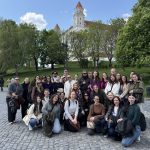
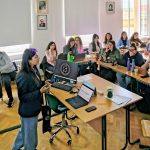
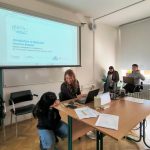
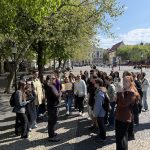
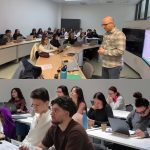
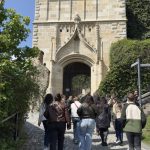
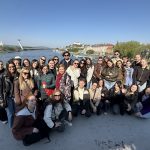
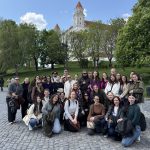
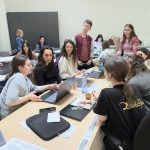
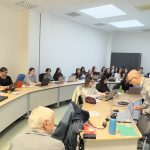
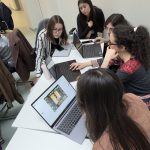
- Programme Overview: The BIP is structured as a blended format combining an online introductory session, a five-day intensive week in Bratislava, and an online closing session with final presentations. The face-to-face week takes place between April 20 and 24, 2026, with the online components scheduled for March 23 and May 18, 2026. The programme brings together students and specialists around the theme of neology explored through the lenses of corpus linguistics, terminology, specialized translation, and linguistic landscape analysis. Participants work in interdisciplinary groups on a collaborative research project, moving from problem identification through data collection to preliminary findings and final presentation. The design of the course offered during the physical component draws on Challenge-Based Education (CBE), in which students solve real-life problems, and the steps they take involve academia and external stakeholders.
The programme covers the following core areas:
- ENEOLI introduction to the participants by Giovanni Tallarico, Chair of ENEOLI COST Action.
- Introduction to neology by Onorina Botezat, Bucharest University of Economic Studies, ENEOLI Science Communication Coordinator and Member of WG1.
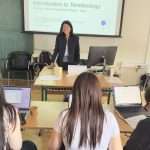
- Terminology applied to specialized translation, by Federica Vezzani, Università degli Studi di Padova, WG2 Co-Leader.
- Corpus linguistics and the use of Sketch Engine for retrieving neologisms, Iztok Kosem.
- Vladimir Benko from Ľ. Štúr Institute of Linguistics.
- Professional communication between translators and clients by Martin Eichler, Translata.
- Piotr Nagorka (food terminology case study), 3.7 Task co-leader on Neologisms in (Professional) Communication on Food and Drink.
- Linguistic landscape analysis through fieldwork.
- Collaborative project design, execution, and presentation.
BIP Neology for Wordaholics represents a concrete example of how department staff participation in European research networks can generate direct educational and collaborative benefits. The programme enhances the department’s visibility at the European level, strengthens links with partner institutions involved in the ENEOLI Action, and provides students with an internationally-oriented, research-informed learning experience. As a project formally resulting from Action activities, it also contributes to the measurable outputs reported by the ENEOLI COST Action, demonstrating the Action’s capacity to stimulate collaborative projects involving multiple participants across national boundaries.