
DCG: Lexical Innovation in Luxembourgish from News to LLMs
Name: Nina Hosseini Kivanani
Start : 11/05/2026
End: 16/05/2026
With the support of a Dissemination Conference Grant from COST Action CA22126 ENEOLI, Nina Hosseini-Kivanani participated in LREC 2026 and the NeoLLM 2026, held at the Palau de Congressos de Palma in Palma, Mallorca, Spain. Under the Mediterranean sun, and with plenty of linguistic curiosity, she presented two oral contributions on Luxembourgish lexical innovation, borrowing, neology, and low-resource multilingual language technologies.
The first presentation, “LuxBorrow: From Pompier to Pompjee, Tracing Borrowing in Luxembourgish,” co-authored with Fred Philippy, introduced a corpus-based study of lexical borrowing in Luxembourgish news articles published on RTL.lu between 1999 and 2025. The talk showed how French, German, and English words travel into Luxembourgish, sometimes changing their form, their pronunciation, and even their social life along the way. The presentation sparked valuable discussions on corpus construction, borrowing annotation, language identification, donor-language attribution, and the sometimes tricky boundary between lexical borrowing and code-switching.
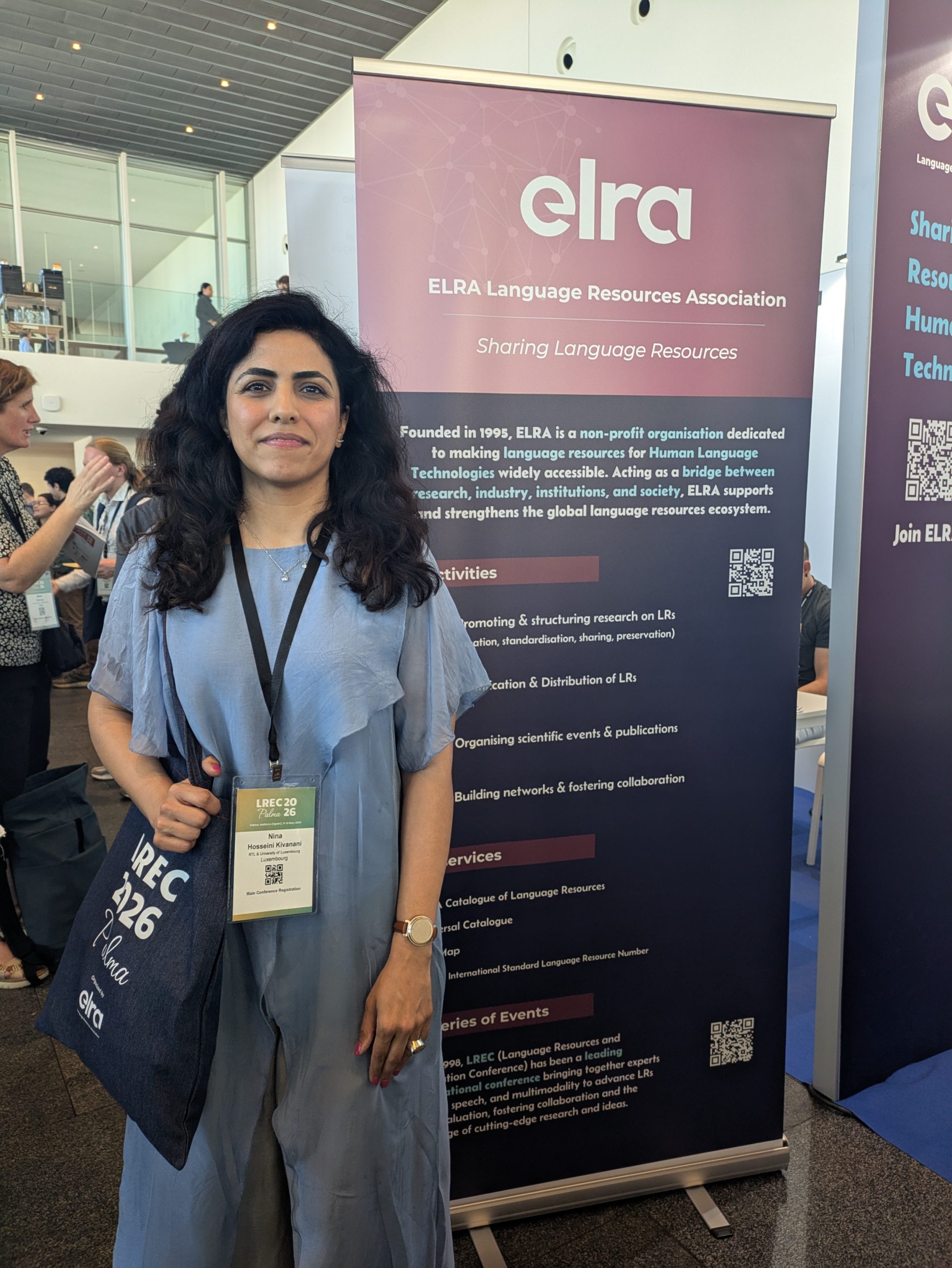
The second presentation, “Do LLMs Know What Luxembourgish Borrows? Probing Lexical Neology in Low-Resource Multilingual Models,” was delivered at the NeoLLM 2026. It introduced LexNeo-Bench, a benchmark derived from LuxBorrow for evaluating whether multilingual large language models can identify Luxembourgish borrowings, adapted lexical forms, and other instances of lexical innovation. The results showed that, despite their impressive fluency, current LLMs are not yet natural-born lexicographers, especially when faced with low-resource languages and subtle lexical evidence. However, the study also showed that compact linguistic information about donor languages and morphological adaptation can substantially improve model performance.
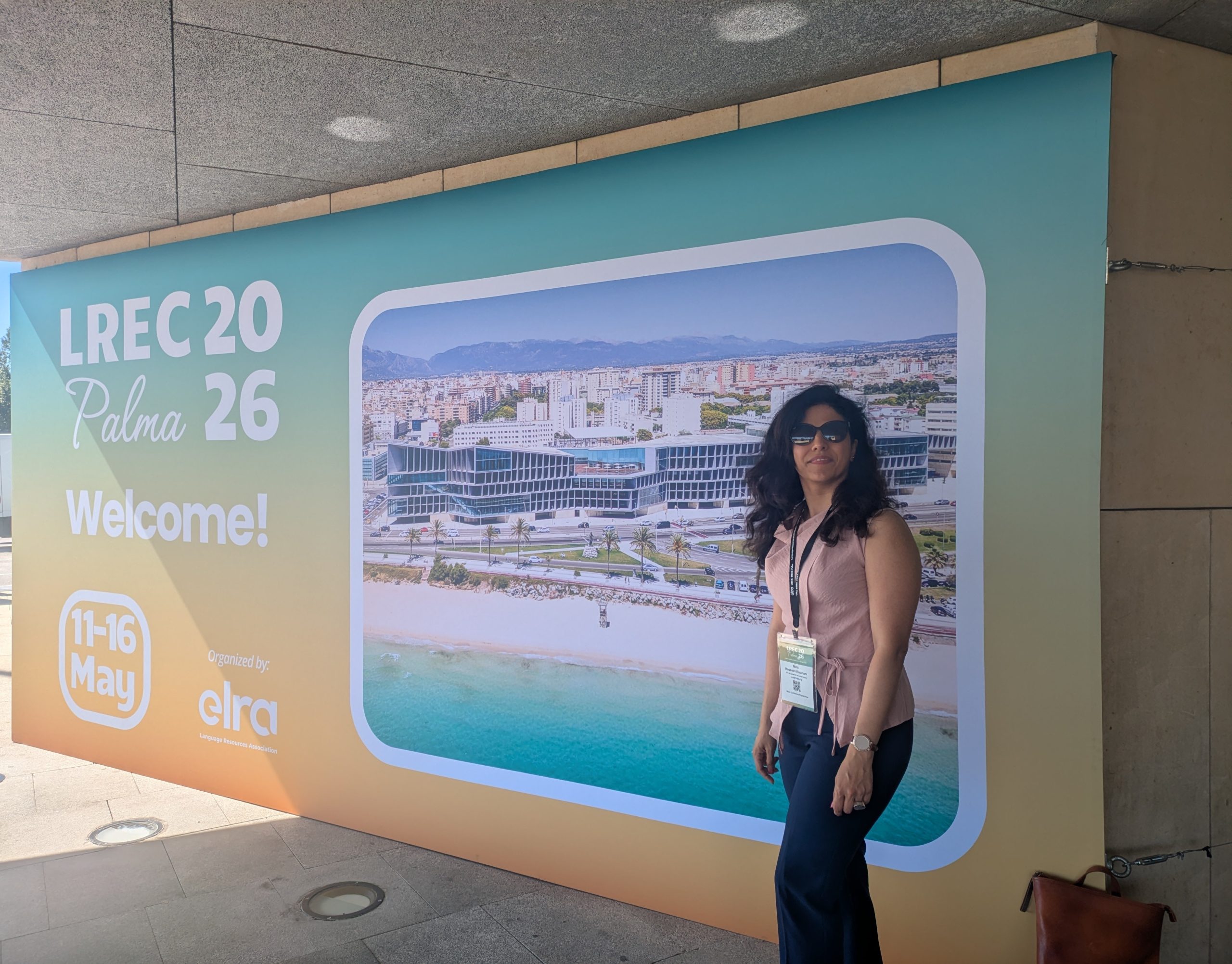 These contributions are closely connected to ENEOLI Working Group 2, Methods, Digital Resources and Tools for Neology. LuxBorrow contributes a diachronic digital corpus and annotation methodology for identifying and describing lexical innovation, while LexNeo-Bench provides a computational resource for evaluating AI-based detection and analysis methods. Together, the two studies present Luxembourgish as a small language with a big lexical story to tell.
The conference participation increased the visibility of ENEOLI within the language resources, neology, lexicography, and multilingual NLP communities. It also opened opportunities for future comparative studies on lexical borrowing, shared evaluation resources, and knowledge-guided approaches for underrepresented languages.
Following LREC and NeoLLM, the outcomes were also reported back to ENEOLI during the WG2 workshop “Tools for the Detection and Analysis of Lexical Innovation” at the 3rd ENEOLI General Meeting in Prague. This helped connect the international feedback received in Palma with the ongoing activities of the Action and brought the discussion back home to the ENEOLI network.
