
DCG: Measuring Anthropomorphism in Italian Specialized Language on AI
Name: Rossella Resi
Start : 24/06/2026
End: 25/06/2026
Does the language we use shape the way we think? Or does the way we think shape the language we use?
Guided by this thought-provoking question, one that remains far from having a definitive answer, Rossella Resi’s research explores the metaphorical use of language, with a particular focus on the attribution of human traits to AI systems through emerging anthropomorphic terminology.
To what extent are people led to believe that AI can think, that a model reasons, or that a system understands? Science has always relied on metaphors to explain and make sense of new concepts, for both pedagogical and epistemological reasons, and that is a valuable thing in all languages. However, anthropomorphization in AI discourse has expanded significantly. An increasing number of human-centered expressions are now used to describe AI technologies, raising important questions about their potential social implications.
The widespread use of anthropomorphic language may encourage emotional attachment to non-sentient artefacts, promote overreliance on AI systems, reduce perceptions of human accountability, and foster misconceptions about the actual capabilities of these technologies.
So, to what extent is the Italian language humanizing technology? Are anthropomorphic terms becoming more frequent? And can this phenomenon be measured?
Rossella Resi’s research proposes a new approach to investigating anthropomorphization in AI discourse. With the support of the ENEOLI COST Action CA22126 on Lexical Innovation, she presented her work on measuring the use of anthropomorphic terminology in Italian specialized language at the Multilingual Digital Terminology Conference (MDTT) in Zadar.
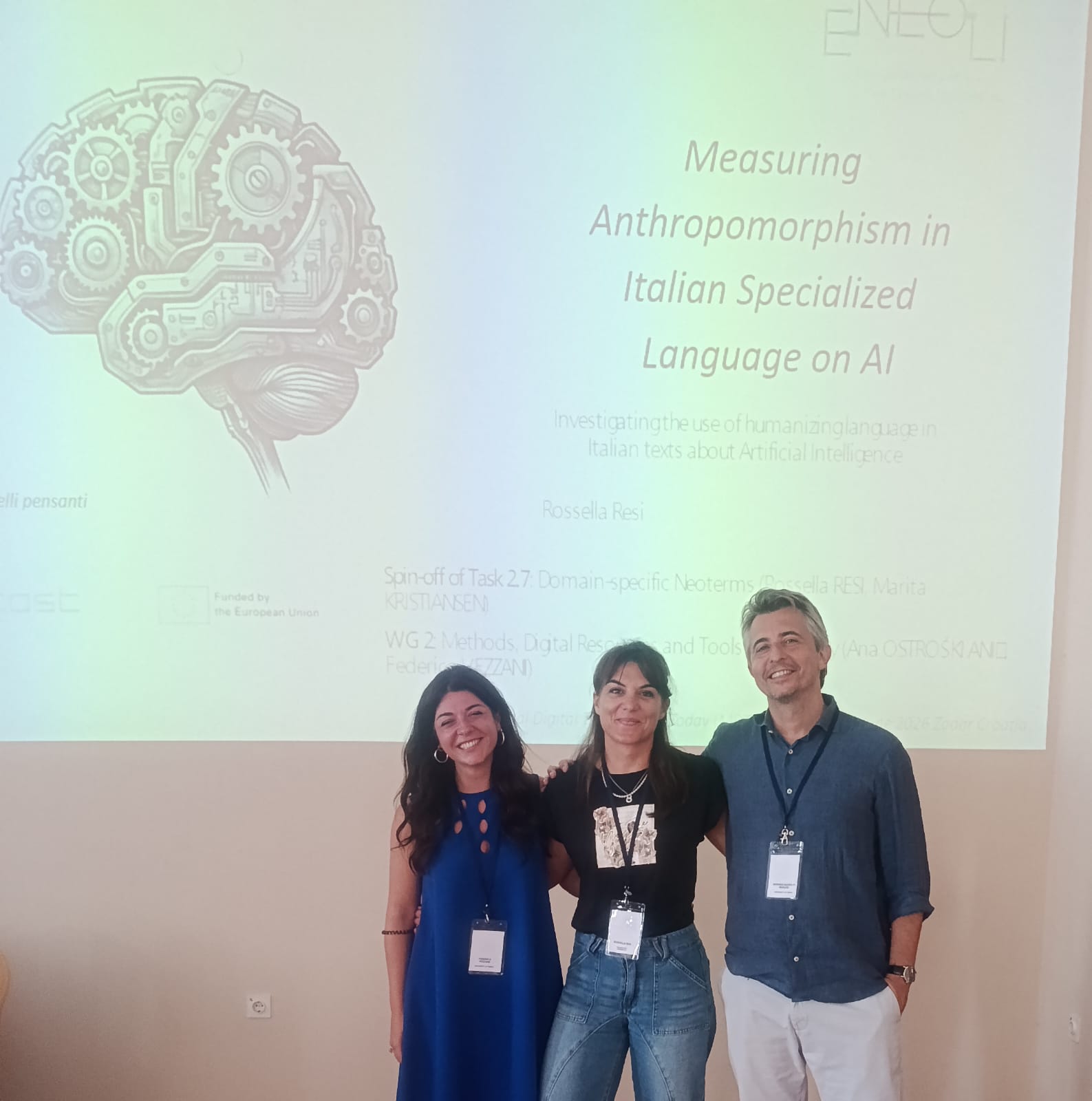
Many thanks to the local organizers, Ana Ostroški Anić, Larisa Grčić, and Kristian Pintar, as well as to the General Chairs, Federica Vezzani and Giorgio Maria Di Nunzio, for hosting the event.
