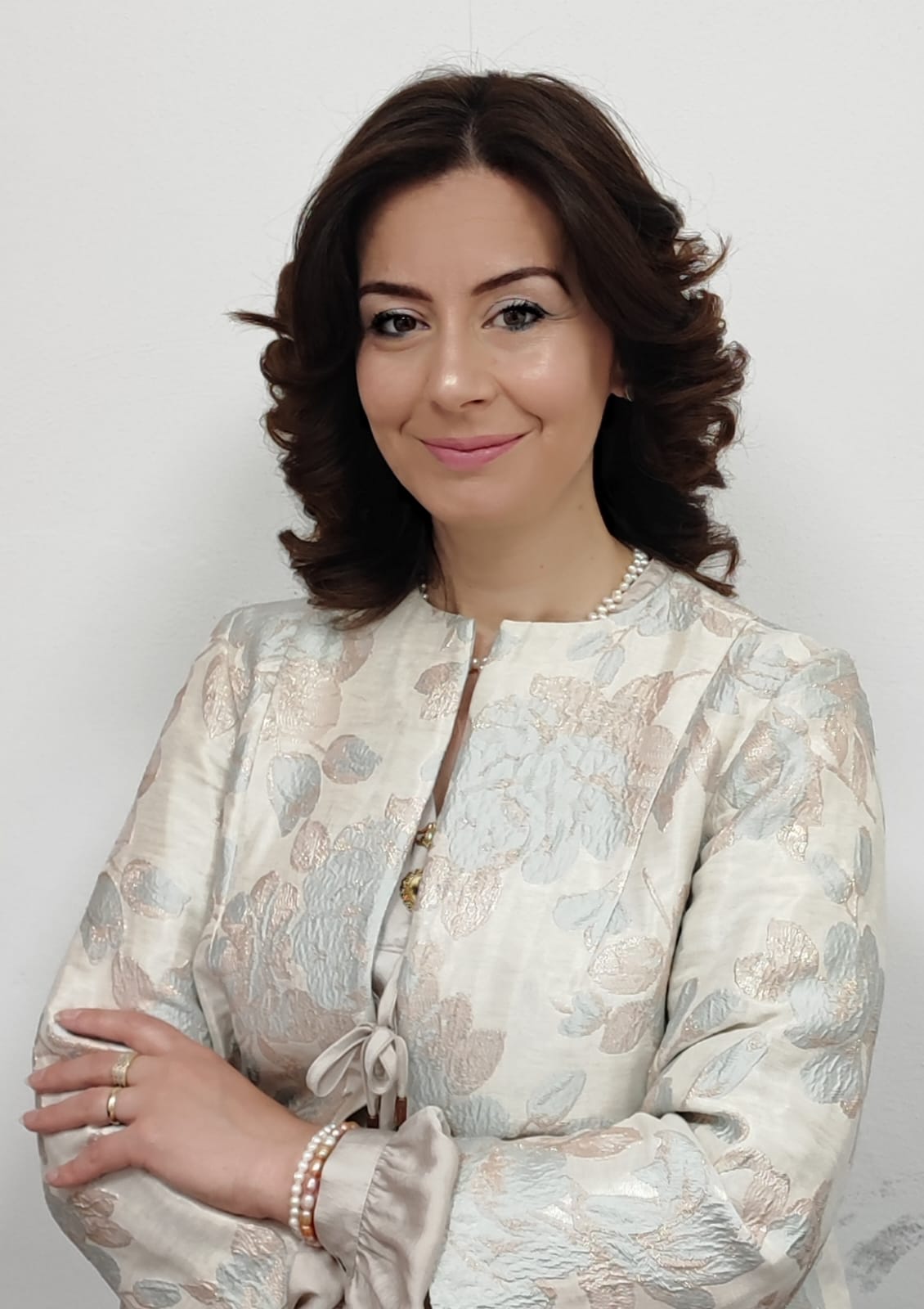
Eriola Qafzezi
Fan S. Noli University, Faculty of Education and Philology
Member of: WG4
FEATURED NEOLOGISM:
Literature is a powerful source of neologisms. I have chosen the term ‘bokanovskify’, a neologism created by Aldous Huxley in ‘Brave New World’ (1932), an English dystopian novel that critiques individuality, freedom, and the consequences of a utopian society built on technological control and the suppression of human nature. The term derives from the fictional ‘Bokanovsky Process’, another coinage by Huxley, describing the artificial division of a single human egg into up to 96 identical embryos. It combines the proper noun ‘Bokanovsky’ with the productive verb-forming suffix ‘-ify’ (e.g., “terror-terrify”), signifying the proccess. Both terms critique the mechanization of society and the dehumanization of individuality.
It is interesting to see what happens in translation with neologisms. In the Albanian translation (2012), ‘Bokanovsky Process’ is rendered as ‘Procesi Bokanovski,’ a direct borrowing adapted to rules of inflection in Albanian language. Similarly, ‘bokanovskify’ becomes “bokanofsifikoj,” following rules of word formation and inflections of Albanian language, with the verb-forming suffix ‘-o’ and inflectional ending ‘-j’ (first person singular, present tense of the verb). This borrowing preserves the cultural significance of the original coinage, while introducing a neologism even in Albanian language.
Eriola Qafzezi, an Associate Professor of Text Analysis and Translation Studies and Head of the Department of Foreign Languages (Faculty of Education and Philology) at “Fan S. Noli University”, Korça, Albania, specializes in linguistics and translation studies. With over 15 years of experience, she has led national projects such as STI(G)MA, focusing on media discourse, and has participated in national projects like DIGICOMP, and international projects like VALEU-X, promoting digital tools for language education. Her research encompasses comparative studies between English and Albanian, media discourse, multilingualism, and translation, emphasizing underrepresented languages like Albanian. She has published extensively on language and culture, discourse analysis, and translation practices. As a dedicated educator and researcher, she fosters interdisciplinary approaches to neology, engaging in the practical application of linguistic innovation in literature, lexicography, and digital education. Her expertise aligns with ENEOLI’s goals of advancing neology through collaborative research, comparative studies, and training. Link to ORCID https://orcid.org/0000-0003-3874-8359.