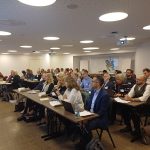
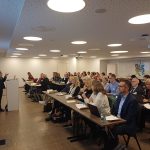
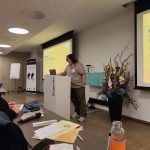
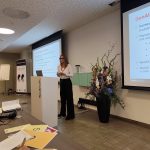
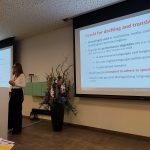
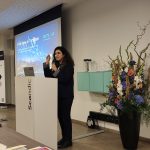
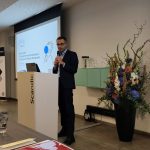
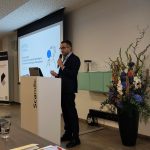
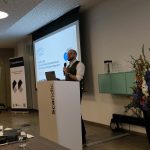
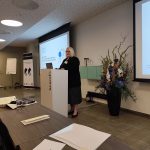
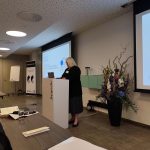
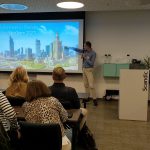
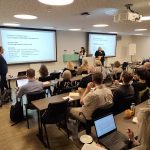
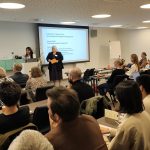
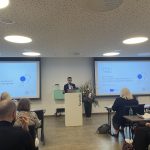
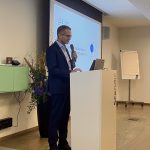
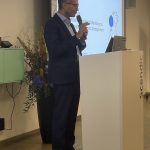
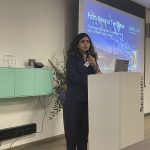
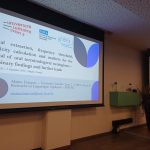
The second International Workshop on Terminological Neologism Management,
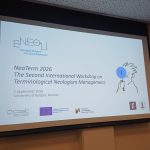
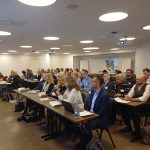
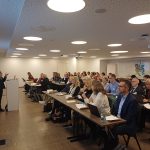
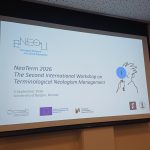
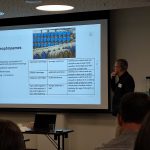
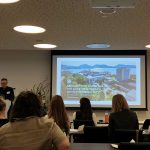
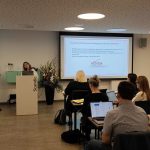
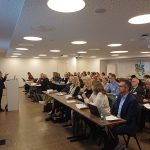
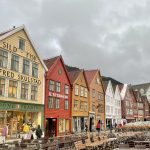
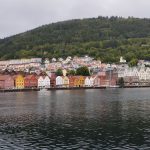
NeoTerm 2026, took place on 3 September 2026 at Scandic Ørnen in Bergen, Norway. Organised by the ENEOLI COST Action and hosted by the University of Bergen, the workshop followed the successful first edition held in Thessaloniki, Greece, in 2025. A special thank you to Marita Kristiansen as local organiser of this edition.
For the first time, an ENEOLI event was held immediately before events organised by two major international terminology associations: Nordterm and the European Association for Terminology (EAFT). NeoTerm 2026 thus formed part of a wider programme dedicated to “Språkleg berekraft og beredskap / Linguistic sustainability and preparedness”, which took place on 4 September and also marked the 30th anniversary of EAFT and the 50th anniversary of Nordterm.
NeoTerm 2026 focused on the role of neology studies in promoting democracy, trust and preparedness. At a time when trust in science and public authorities is under pressure, the ability to communicate specialised knowledge clearly to broad and diverse audiences is more important than ever. The workshop addressed the emergence, identification and management of new concepts and terms in areas such as climate change, geopolitics, sustainability and global health. Its programme explored how terminological neologisms can be detected, analysed, validated and integrated into terminology resources, while also considering the implications of artificial intelligence and language technologies for future terminology work.
The discussions covered a wide range of approaches, including:
- automatic and semi-automatic extraction of neologisms;
- the use of artificial intelligence, large language models and small language models;
- terminology management and the integration of new terms into termbases;
- Linked Open Data and ISO standards;
- conceptual neology and the foundations of neological terminology;
- ontology design and long-term semantic consistency;
- neologisms in political, legal, migration and conflict-related discourse;
- oral and spoken corpora;
- multilingual and cross-linguistic approaches to neology.
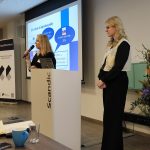
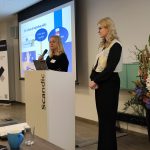
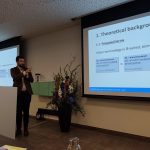
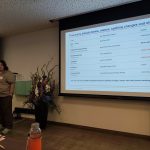
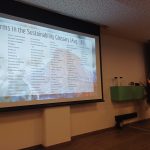
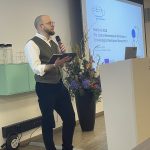
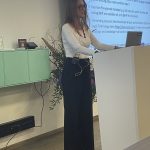
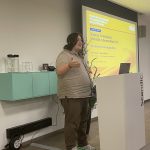
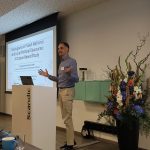
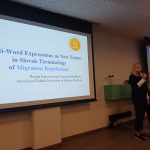
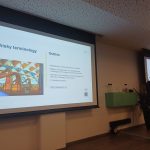
In keeping with the spirit of ENEOLI, the workshop brought together a highly international group of researchers. Speakers represented 12 countries, including Luxembourg, Germany, Israel, Italy, the Netherlands, Slovakia, Poland, Spain, France, Austria, Norway and Sweden. A contribution to the ENEOLI multilingual glossary of neology as a foundational intersection of terminology and neology was prepared by eight authors from eight different countries. The multilingual glossary of neology is one of the major deliverables of the ENEOLI COST Action, developed through the compilation of a specialised corpus of linguistic studies on neologisms, the identification of core concepts in neology, the design of the lexicographic article microstructure, and the drafting of the entries. The presentations reflected the breadth of current research in terminological neology. Topics included generative AI and non-dominant language varieties, diachronic small language models, multi-word expressions in Slovak migration terminology, political discourse in Polish, specialised translation, legal terminology, sociolinguistics, ecolinguistics, computational neology, ontology design and the terminology of Norway’s emerging whisky industry. The workshop also demonstrated the diversity of languages and research traditions involved in the study of new terms. Contributions examined neological developments in Luxembourgish, French, English, Italian, German, Slovak, Polish, Spanish, Catalan and Norwegian, among other linguistic contexts.The keynote lecture, “Words, words, words: Why language matters, even now”, was delivered by Linnea Hanell, researcher at the Institute for Language and Folklore and the Language Council of Sweden and highlighted the continuing importance of language in contemporary society and provided a broader perspective on the role of words in shaping public understanding, social participation and communication. It complemented the workshop’s focus on how new terminology emerges and how it can be managed responsibly in times of rapid change.
NeoTerm 2026 provided an opportunity to exchange ideas across languages, disciplines and methodological traditions, while strengthening connections between researchers and institutions working on terminology and neology. The organisers are pleased to announce that NeoTerm 3 will take place next year with a new concept. Further information will be announced in due course.
Selected papers from NeoTerm 2026 will be published in Terminology Science and Research (TSR), the journal of the European Association for Terminology.